Generative Art on a Supercomputer (CM-2, circa 1989)
June 25, 2025 • 👁️ Loading...
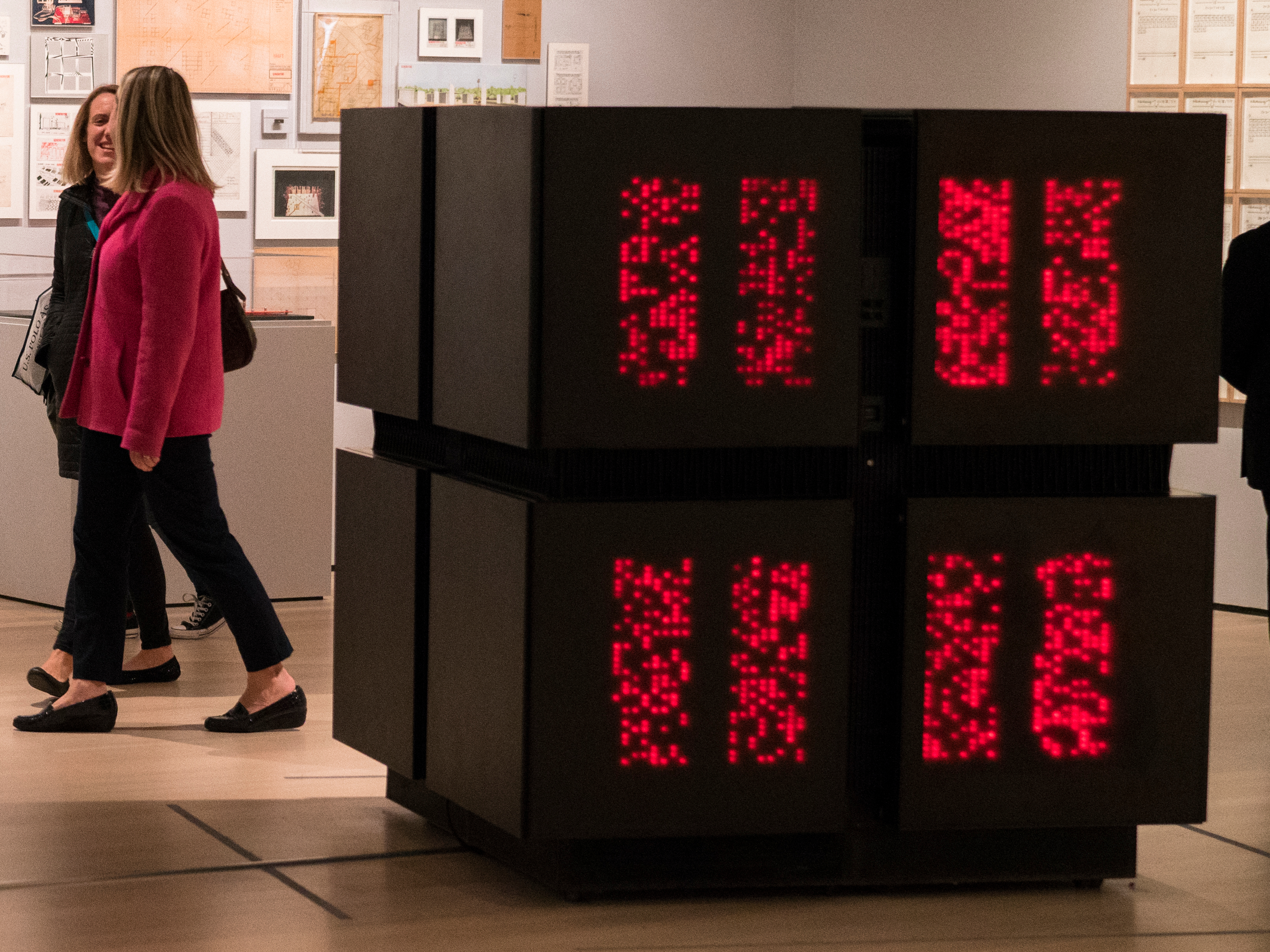
Connection Machine CM-2 on display. Photo by Billie Grace Ward from New York, USA. CC BY 4.0, via Wikimedia Commons
In the late 1980s, I had the rare opportunity to write code for a Connection Machine CM-2, one of the most visually striking and conceptually ambitious supercomputers of the time. The machine was located at NCAR in Boulder, Colorado, and to access it, I had to drive up to the facility and sit down at a terminal hooked into one of the most powerful computing systems of the day.
Looking back on this I remember the feeling of doing something special. I had to sign up for a time slot and it was in the evening (probably a weekend) when I got my time slot with the machine. NCAR in Boulder is an imposing building up on the foothills of the Rocky Mountains. I must admit I felt a little bit like I was approaching some villain's secret lair driving up there in the dark on a weekend.
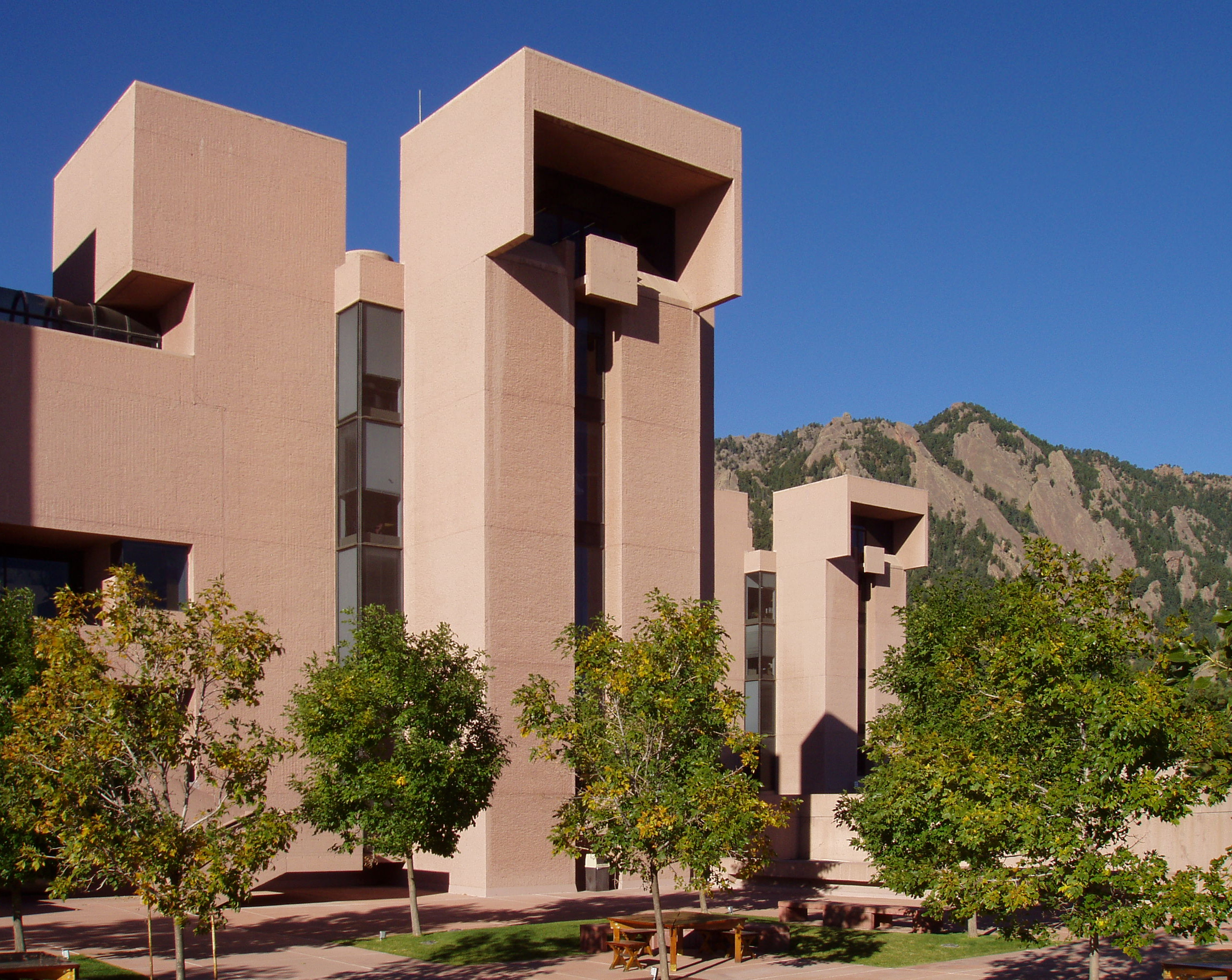
The NCAR Mesa Laboratory* in Boulder, Colorado. Definitely giving off some serious "secret mountain fortress where the evil genius plots world domination" vibes. It housed one of the most advanced supercomputers on the planet. Close enough. *
By en:user:Daderot - Original photo, CC BY-SA 3.0, Link
The Machine: Thinking Machines Corporation CM-2
Manufactured by Thinking Machines Corporation (TMC), the CM-2 was a massively parallel computer with up to 65,536 1-bit processors. These processors were arranged in a hypercube network, enabling massive parallelism for data-intensive tasks. It was a machine originally envisioned for AI and complex simulations, but it also had a unique visual flair: its blinking red LEDs on the front face showed processor activity in real time, making it a kind of digital sculpture as well.
- More on the CM-2: Wikipedia: Connection Machine
- More on TMC: Wikipedia: Thinking Machines Corporation
The Framebuffer
What made the CM-2 even more fascinating for creative work was its framebuffer system, which enabled real-time visualization of simulations and data. The framebuffer supported up to 1024x1024 resolution and could output both grayscale and 24-bit color images. This was bleeding-edge for the time and gave scientists and researchers the ability to visually interpret massive parallel computations.
My C* Program: Randomized Pixel Growth
The CM-2 was programmed using a dialect called C* (C-star), a variant of C designed to work with SIMD (Single Instruction, Multiple Data) architectures.
I wrote a generative art program that created evolving pixel patterns on the framebuffer. Here's the basic idea:
- Random pixels were turned on initially.
- Each frame, the program would evaluate adjacent pixels.
- If a pixel was near an already "on" pixel, it had a higher chance of being turned on or having its brightness increased.
- Over time, the image "grew" organically, like moss or crystal formations, creating a randomized but cohesive aesthetic.
The Original C* Code (Reconstructed)
Based on my memory and the C* language specification, here's what the core algorithm probably looked like:
#include <cm/cmmd.h>
#include <cm/paris.h>

shape [1024][1024] pixel_field;
var pixel_field: int brightness;
var pixel_field: int next_brightness;

void seed_initial_pixels() {
    // Seed random pixels across the field
    where (random() < 0.001) {
        brightness = random_int(150, 255);
    }
}

void propagate_pixels() {
    // Clear next generation
    next_brightness = 0;

    // For each active pixel, propagate to neighbors
    where (brightness > 0) {
        int rand_dir = random_int(1, 10);

        if (rand_dir == 9) {
            // Increase current pixel brightness
            next_brightness = min(255, brightness + 1);
        } else {
            // Propagate to neighbor based on direction
            switch(rand_dir) {
                case 1: [+1][-1] next_brightness += 1; break;  // NW
                case 2: [+0][-1] next_brightness += 1; break;  // N
                case 3: [-1][-1] next_brightness += 1; break;  // NE
                case 4: [+1][+0] next_brightness += 1; break;  // W
                case 5: [-1][+0] next_brightness += 1; break;  // E
                case 6: [+1][+1] next_brightness += 1; break;  // SW
                case 7: [+0][+1] next_brightness += 1; break;  // S
                case 8: [-1][+1] next_brightness += 1; break;  // SE
            }
        }
    }

    // Clamp brightness values
    next_brightness = min(255, next_brightness);

    // Copy to current generation
    brightness = next_brightness;
}

void render_to_framebuffer() {
    // Send pixel data to graphics framebuffer
    where (brightness > 0) {
        framebuffer_pixel = RGB(brightness, brightness, brightness);
    } elsewhere {
        framebuffer_pixel = RGB(0, 0, 0);
    }
}

main() {
    CM_paris_initialize();

    seed_initial_pixels();

    for (int iteration = 0; iteration < 255; iteration++) {
        propagate_pixels();
        render_to_framebuffer();
        CM_framebuffer_update();
    }

    CM_paris_finalize();
}
The beauty of C* was that operations like where (brightness > 0) would execute in parallel across all 65,536 processors simultaneously. Each processor handled a small section of the 1024x1024 grid, making this massively parallel computation possible in the 1980s.
This was one of my earliest experiments with emergent behavior in code — a concept that still fascinates me today.
Modern Recreation with p5.js
I've recently recreated the concept using p5.js, a JavaScript library for creative coding. The structure is similar: random seeds, neighbor detection, probabilistic growth. While modern hardware makes this trivial to run in a browser, the underlying idea is still rooted in that late-80s moment of discovery and exploration.
Reflections
Working on the CM-2 was like painting with a galaxy of blinking neurons. It was both awe-inspiring and humbling to push pixels around in parallel at a time when most people hadn't yet seen a GUI.
"The CM-2 didn’t just compute—it pulsed, it shimmered, it came alive." — Me, probably
If you're into generative art, creative coding, or computer history, hit me up—I'd love to hear from others who remember the CM-2 or are reimagining it in modern code.
Stay weird.